

 Tolulope Michael
How Long Does It Take to Get ISO 27001 Certified (2026 Guide)
Getting ISO 27001 certified is one of the strongest signals that your organization takes information security seriously. Yet, one of the most common questions businesses and professionals ask before starting the process is:
“How long does it take to get ISO 27001 certified?”
The truth is, there’s no single answer. The timeline can vary widely depending on the size of your organization, the complexity of your data systems, and how mature your existing security practices are. For some, it takes just a few months. For others, it can stretch close to a year.
This 2026 guide breaks down exactly how long ISO 27001 certification takes, what each stage involves, and how modern compliance automation tools can help you cut the timeline dramatically, sometimes from months to weeks. You’ll also discover the costs involved, what it takes for individuals to get certified, and how to maintain your certification once achieved.
If you’re ready to take the next step in your tech career journey, cybersecurity is the simplest and high-paying field to start from. Apart from earning 6-figures from the comfort of your home, you don’t need to have a degree or IT background. Schedule a one-on-one consultation session with our expert cybersecurity coach, Tolulope Michael TODAY! Join over 1000 students in sharing your success stories.

RELATED ARTICLE: Hashhitrust Vs ISO 27001: A Comprehensive Analysis
ISO 27001 Certification Overview
ISO 27001 is the international standard for creating, implementing, and maintaining an Information Security Management System (ISMS), a structured framework that helps organizations protect sensitive information from threats like breaches, leaks, or unauthorized access.
In simple terms, ISO 27001 certification proves that your company manages data responsibly and securely. It’s recognized globally and often required by clients, investors, and regulators before they entrust you with confidential data.
For organizations, ISO 27001 certification for companies demonstrates credibility, compliance, and readiness to handle information security risks. For individuals, how to get ISO 27001 certification for individuals usually involves completing accredited training and passing a certification exam that validates their knowledge of the ISO 27001 framework.
Whether you’re a growing startup looking to build trust, a large enterprise seeking regulatory compliance, or a professional hoping to advance your cybersecurity career, ISO 27001 certification acts as a powerful badge of assurance.
How Long Does It Take to Get ISO 27001 Certified? (Typical Timeline)
The average time it takes to get ISO 27001 certified is between 3 and 12 months, depending on your organization’s size, complexity, and readiness level. Smaller companies with fewer systems and simpler structures can become audit-ready in as little as three to six months. Large enterprises with complex IT environments and multiple departments may take closer to a year.
However, with modern compliance automation tools, companies can shorten this process significantly. Some platforms now help businesses get audit-ready in just 2 to 8 weeks, reducing manual documentation and evidence collection time.
The Average Timeline (3–12 Months)
Here’s a general breakdown of what to expect:
- Small businesses: Around 3–6 months from preparation to certification.
- Medium to large organizations: 6–12 months or longer.
- With automation (e.g., Secureframe, Sprinto, Vanta): 2–8 weeks to prepare for audit.
For 2026, as organizations increasingly adopt cloud-based compliance tools, the question “how long does it take to get ISO 27001 certified 2026?” reflects this new reality; certification is faster and more accessible than ever.
ISO 27001 Certification Timeline Breakdown
To understand where your time will go, here’s how the process typically unfolds:
- Phase 1 – Pre-Audit (1–4 months): Define your ISMS scope, conduct a risk assessment, document policies, implement controls, and perform an internal audit.
- Phase 2 – Certification Audit (2–6 months): Consists of Stage 1 (document review) and Stage 2 (implementation and effectiveness review).
- Phase 3 – Surveillance Audits: Annual reviews to confirm ongoing compliance during the three-year certification cycle.
- Phase 4 – Recertification: Conducted at the end of year three to renew your certification for another three years.
This process ensures your organization doesn’t just meet ISO requirements once, but maintains security and compliance continuously.
READ MORE: What Is BIA in Cyber Security? 2026 Complete Guide
Factors That Affect How Long ISO 27001 Certification Takes
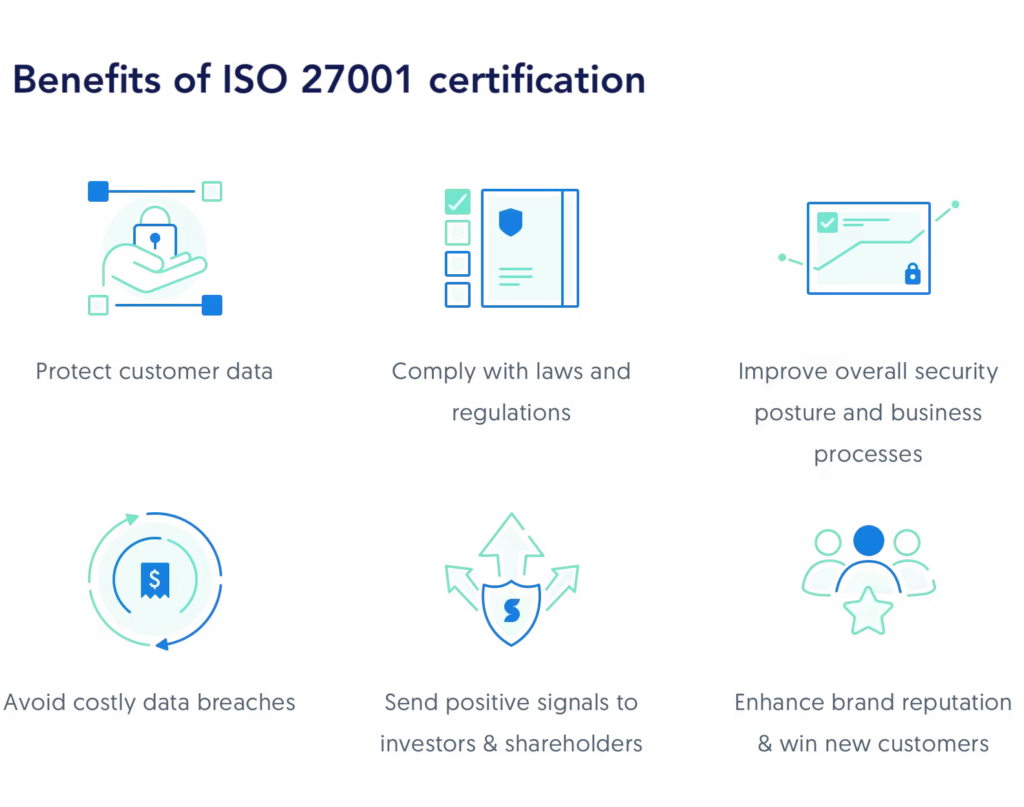
While the average certification timeline ranges between 3 and 12 months, several factors can make the process faster or significantly longer. Understanding these factors helps you plan effectively and allocate resources wisely.
1. Organization Size and Structure
Larger companies usually take more time because they have more departments, processes, and data systems to review. A 50-person startup with one cloud environment might need 4 months, while a multinational enterprise with multiple subsidiaries could take up to a year or more.
2. Complexity of Data and IT Systems
Organizations dealing with sensitive or regulated data, such as healthcare or financial firms, need more robust controls and evidence. The more complex your data flows and integrations, the longer the auditor will take to review and verify compliance.
3. Existing Security Maturity
If you already have policies, risk assessments, and internal audits in place, you’re ahead of the curve. Businesses starting from scratch will need extra months to design and implement their ISMS framework properly.
4. Resource Allocation and Internal Commitment
ISO 27001 is not just a “checklist project.” It requires involvement from leadership, IT, HR, and legal teams. The more committed your internal team is, and the more time they dedicate, the smoother the journey.
5. Use of Compliance Automation Tools
Automation has become a game-changer. Tools like Vanta, Sprinto, or Secureframe can cut manual evidence collection and policy creation by over 60%. They offer dashboards, pre-built policy templates, and continuous monitoring that make audit readiness far quicker.
When these factors align, strong team collaboration, existing documentation, and the right technology, organizations can complete the certification process in record time without compromising quality.
ISO 27001 Certification Cost (2026 Estimates)
Getting ISO 27001 certified isn’t just a time investment; it also involves financial planning. The cost varies widely depending on your organization’s size, complexity, and the certification body you choose.
For 2026, the average ISO 27001 certification cost ranges from $50,000 to $200,000 for companies. Smaller startups often fall near the lower end of the range, while large enterprises with complex infrastructures and multiple locations should budget for the higher end.
Breakdown of ISO 27001 Certification Costs for Companies
Here’s a general estimate of where the money goes:
- Gap Assessment & Consulting: $5,000 – $25,000
- Implementation & Policy Development: $10,000 – $40,000
- Training & Internal Audits: $5,000 – $15,000
- Certification Audit Fees: $10,000 – $50,000 (varies by audit scope and certification body)
- Ongoing Maintenance & Surveillance Audits: $5,000 – $20,000 per year
Automation tools like Sprinto or Vanta can reduce these costs by as much as 60%, since they handle evidence collection, documentation, and monitoring automatically, saving both time and labor.
ISO 27001 Certification Cost for Individuals
If you’re pursuing ISO 27001 certification for individuals, the cost is much lower.
- ISO 27001 Lead Implementer or Lead Auditor Courses: $300 – $1,000 depending on the training provider and certification level.
- ISO 27001 Certification Exam: Typically around $200 – $500 per attempt.
For professionals, these certifications serve as valuable credentials to advance into roles such as Information Security Officer, Compliance Manager, or ISO 27001 Auditor.
While costs vary, the investment pays off in reputation, trust, and potential new contracts, especially for tech companies and SaaS providers operating in data-sensitive industries.
How to Get ISO 27001 Certification (Step-by-Step)
Becoming ISO 27001 certified follows a structured, step-by-step process designed to build a strong Information Security Management System (ISMS) that meets international standards. Whether you’re a company or an individual preparing to manage or audit compliance, the following roadmap outlines exactly what’s required.
Step 1: Define Your ISMS Scope
Decide which parts of your organization the ISMS will cover: specific departments, data systems, or your entire operation. A well-defined scope ensures you don’t waste time auditing irrelevant areas and keeps the certification focused.
Step 2: Conduct a Risk Assessment
Identify potential risks that could threaten information security, like data breaches, unauthorized access, or system downtime. Then evaluate their impact and create risk treatment plans to mitigate them.
Step 3: Implement Security Controls and Policies
Based on your risk assessment, apply relevant Annex A controls (such as access control, encryption, and incident management). Draft security policies, train your employees, and put procedures in place to protect sensitive data.
Step 4: Document and Train Employees
Proper documentation is key to ISO 27001 success. Record your processes, procedures, and evidence of controls. Conduct staff awareness training so everyone understands their role in maintaining compliance.
Step 5: Conduct an Internal Audit
Before the official audit, perform an internal audit to confirm that your ISMS aligns with ISO 27001 requirements. This helps you identify and correct any weaknesses in advance.
Step 6: Hire a Certification Body
Choose an accredited third-party auditor to perform your certification audit. They will conduct both Stage 1 (document review) and Stage 2 (implementation and effectiveness assessment) audits.
Step 7: Achieve Certification
Once you’ve successfully passed both audit stages, you’ll receive your ISO 27001 certification, valid for three years.
For individuals wondering how to get ISO 27001 certification for individuals, the process involves completing a recognized training course (such as Lead Implementer or Lead Auditor) and passing the ISO 27001 certification exam.
SEE ALSO: Certified in Cybersecurity vs Security+: A Comprehensive Review
How to Become an ISO 27001 Certified Auditor

If you’re looking to specialize in information security auditing, becoming an ISO 27001 Certified Auditor is a valuable career move. Auditors play a critical role in helping organizations evaluate whether their Information Security Management Systems (ISMS) meet ISO 27001 standards.
Here’s what the path typically looks like:
1. Gain Foundational Knowledge of ISO 27001
Start by learning the fundamentals of information security and risk management. You should understand ISO 27001 clauses, Annex A controls, and how an ISMS operates within different types of organizations.
2. Enroll in an Accredited Training Program
Choose a recognized course such as:
- ISO 27001 Lead Auditor Training (PECB, BSI, or IRCA)
- ISO 27001 Lead Implementer Course
These programs typically run for 3–5 days and include both theoretical and practical components.
3. Pass the ISO 27001 Certification Exam
After training, you’ll sit for the ISO 27001 certification exam, which tests your understanding of audit principles, risk management, and compliance evaluation. Passing the exam earns you a certificate that’s recognized globally.
4. Gain Practical Audit Experience
To become fully certified, you’ll need hands-on audit experience, either as part of an internal audit team or as an observer under a qualified lead auditor. This step strengthens your ability to conduct real-world audits with confidence.
5. Apply for Certification
Once you meet the required training and experience criteria, you can apply for official auditor certification from recognized bodies like IRCA, BSI, or PECB.
Becoming an ISO 27001 certified auditor not only enhances your professional credibility but also opens doors to high-demand roles in cybersecurity, compliance, and consulting.
MORE: Google Cybersecurity Certification: A Complete Guide
Maintaining and Renewing ISO 27001 Certification
Achieving ISO 27001 certification is a major milestone, but keeping it is just as important. Certification isn’t a one-time event; it’s an ongoing commitment to maintaining and improving your organization’s security posture.
Here’s what you need to know about how long ISO 27001 certification lasts and what’s required to maintain it.
Certification Validity: Three Years
An ISO 27001 certification is valid for three years from the date it’s issued. During this period, your organization must continually monitor, review, and improve its Information Security Management System (ISMS) to ensure it remains compliant.
Annual Surveillance Audits
Each year after certification, an accredited auditor performs a surveillance audit, a lighter version of the main audit. Its goal is to verify that your ISMS is still functioning effectively and that controls remain properly implemented.
- Year 1 & Year 2: Surveillance audits check ongoing compliance and identify areas for improvement.
- Year 3: A recertification audit is conducted to renew your certification for another three-year cycle.
Continuous Monitoring and Internal Reviews
In between audits, your internal teams should:
- Conduct regular internal audits.
- Update risk assessments as your business or technology changes.
- Refresh staff awareness training.
- Review corrective actions and implement improvements.
Failing a surveillance audit or neglecting maintenance can cause your certification to lapse, requiring you to restart the process with a full certification audit.
Maintaining compliance not only ensures your organization’s reputation and credibility but also reinforces a security-first culture that helps prevent costly data breaches.
Fast-Tracking ISO 27001 Certification Through Automation
In the past, getting ISO 27001 certified meant months of manual documentation, policy writing, and evidence collection. Today, technology has made that process dramatically faster. Compliance automation platforms help businesses achieve certification readiness in a fraction of the time, without sacrificing accuracy or compliance quality.
Here’s how automation helps organizations fast-track their ISO 27001 journey:
1. Automated Evidence Collection
Instead of manually gathering hundreds of documents and screenshots, compliance platforms automatically collect evidence from your cloud services, HR tools, and device management systems. This can cut audit prep time by hundreds of hours.
2. Policy Templates and Pre-Built Controls
Creating policies from scratch can be overwhelming. Platforms like Vanta, Sprinto, and Secureframe provide ISO-ready policy templates reviewed by auditors. You can easily customize them to your organization’s needs, saving weeks of writing and review time.
3. Real-Time Audit Dashboards
Automation tools give you a live view of your compliance status, highlighting what’s complete, what’s pending, and what needs attention before the auditor arrives. This makes it easier to delegate tasks and stay audit-ready year-round.
4. Continuous Monitoring
Beyond certification, these tools continuously scan your systems for vulnerabilities and compliance gaps. If an issue arises, the platform alerts you instantly and provides recommended fixes.
For 2026 and beyond, automation has become a strategic advantage. Organizations using these systems often achieve ISO 27001 certification in as little as 6–8 weeks, compared to the traditional 6–12-month timeline.
Conclusion
So, how long does it take to get ISO 27001 certified? The short answer: anywhere from 3 to 12 months, but with the right strategy, preparation, and automation, it can be much faster.
For small and mid-sized businesses, the average certification timeline is around six months, while larger enterprises may take up to a year. The process involves several stages, from defining your ISMS scope and performing risk assessments to completing Stage 1 and Stage 2 audits. Once achieved, your certification remains valid for three years, supported by annual surveillance audits to ensure ongoing compliance.
In 2026, automation tools have made ISO 27001 certification far more accessible, reducing time, effort, and cost for both companies and individuals. Whether you’re seeking ISO 27001 certification for your company, exploring how to get ISO 27001 certification for individuals, or aiming to become an ISO 27001 certified auditor, preparation and consistency remain your greatest assets.
FAQ
How difficult is ISO 27001 certification?
ISO 27001 certification isn’t necessarily difficult, but it’s detailed and process-driven. The level of difficulty depends on your organization’s existing security posture. If you already have structured policies, risk management practices, and security controls in place, the process will be smoother.
However, companies starting from scratch may find the initial setup challenging because it requires documentation, internal audits, and employee training. Using automation tools can simplify most of the heavy lifting and reduce the complexity dramatically.
Is ISO 27001 worth it?
Absolutely. ISO 27001 is one of the most valuable certifications a business can earn. It not only demonstrates your commitment to protecting sensitive data but also builds credibility with clients, regulators, and investors.
For many organizations, especially SaaS, fintech, and healthcare companies, ISO 27001 certification is now a business requirement to win contracts or partnerships. Beyond compliance, it strengthens your cybersecurity resilience and reduces the risk of data breaches, which can save your company millions in the long run.
What happens if you fail an ISO 27001 audit?
Failing an ISO 27001 audit doesn’t mean the end of the road. It simply means the auditor identified nonconformities, areas where your Information Security Management System (ISMS) doesn’t meet the standard’s requirements.
Depending on the severity, you’ll be asked to correct these issues within a defined timeframe (often 30 to 90 days). Once corrective actions are implemented and verified, you can proceed with certification. The key is to treat the feedback as a roadmap for improvement rather than a setback.
How much does an ISO 27001 auditor make?
Salaries for ISO 27001 auditors vary by region, experience, and certification level. In the United States, ISO 27001 Lead Auditors typically earn between $90,000 and $130,000 per year, while senior auditors with advanced credentials or consulting experience can make upwards of $150,000 annually.
In the UK, salaries range from £55,000 to £90,000, depending on the organization and industry. Those combining ISO expertise with cloud or cybersecurity skills often command even higher pay due to growing demand.
