

 Tolulope Michael
How Compliance Reduces Vendor Risk Exposure (2026)
Your vendors are not just partners; they’re extensions of your digital infrastructure. That also means they’re potential entry points for cyberattacks. Studies show that 98% of organizations work with at least one third party that has suffered a breach, proving how fragile supply chain security has become.
The reality is clear: even if your internal systems are airtight, one vendor’s weak compliance program can expose your data, disrupt operations, or trigger legal penalties. That’s where compliance steps in, not as red tape, but as a strategic shield.
This guide explains how compliance reduces vendor risk exposure, why it’s now a board-level priority, and how tools like Bitsight vendor risk management are helping companies detect, monitor, and mitigate third-party risks before they escalate. By the end, you’ll understand how a compliance-driven approach transforms vendor management from guesswork into measurable control.
If you’re ready to take the next step in your tech career journey, cybersecurity is the simplest and high-paying field to start from. Apart from earning 6-figures from the comfort of your home, you don’t need to have a degree or IT background. Schedule a one-on-one consultation session with our expert cybersecurity coach, Tolulope Michael TODAY! Join over 1000 students in sharing your success stories.

RELATED ARTICLE: What Is Vendor Risk Management (VRM) & Vendor Risk?
Vendor Risk Exposure in Risk Management
Vendor relationships are indispensable for growth, efficiency, and innovation, but each one adds another layer of risk to your organization’s ecosystem. Vendor risk exposure refers to the potential loss or disruption your organization could face if a third-party vendor fails to protect your data, maintain compliance, or uphold service commitments.
What Is Vendor Risk Exposure?
In risk management, vendor risk exposure encompasses all possible outcomes stemming from a vendor’s weakness, be it a cybersecurity breach, operational failure, or regulatory violation. A vendor risk exposure example could be when a payroll provider’s system outage halts employee payments or when a marketing software vendor leaks customer data, resulting in reputational damage and financial penalties.
The Hidden Costs of Vendor Risk Exposure
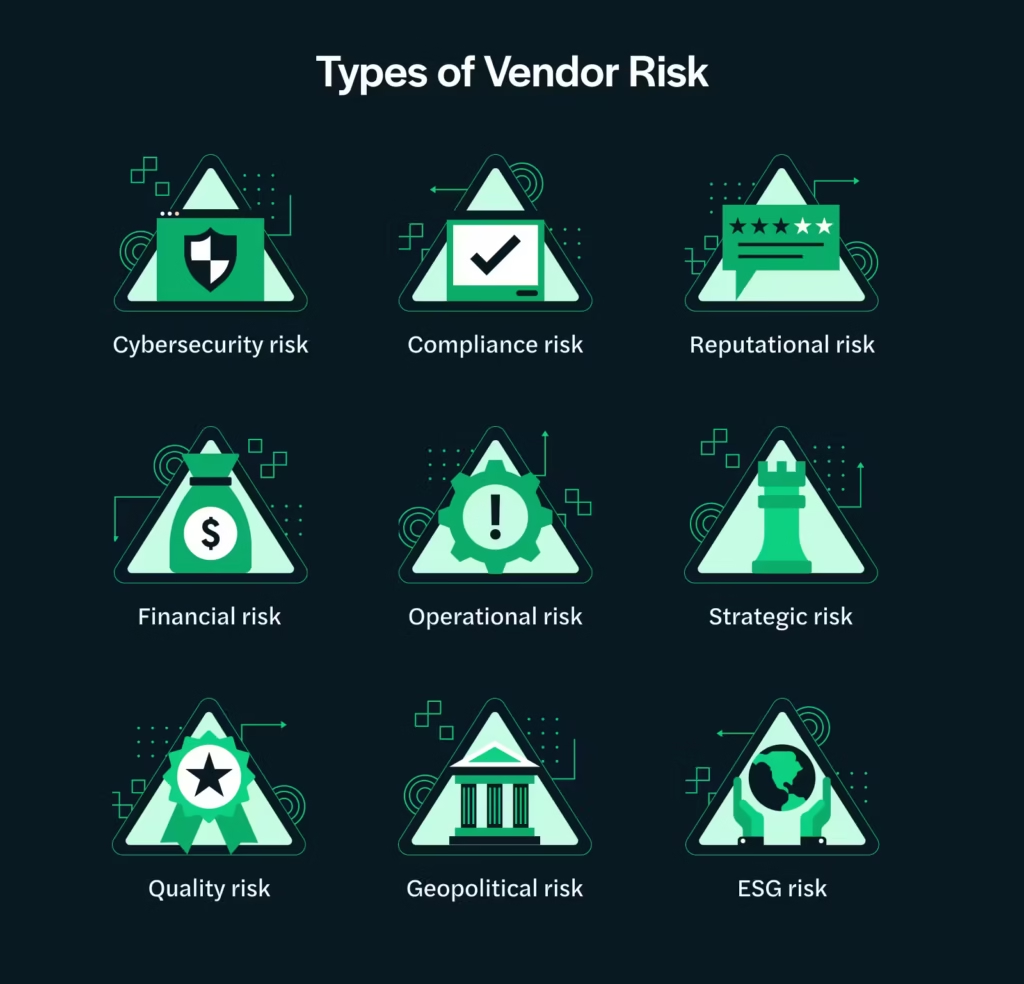
Vendor risk exposure extends far beyond technical failures. It can trigger:
- Operational risk: Disruptions that affect business continuity.
- Financial risk: Direct costs from data breaches, ransom payments, or regulatory fines.
- Reputational risk: Loss of customer trust due to third-party incidents.
- Compliance risk: Legal exposure when vendors fail to meet GDPR, HIPAA, or PCI DSS standards.
In short, vendor risk exposure in risk management isn’t just about IT; it’s about protecting your brand, finances, and customer confidence.
Why Compliance Is the Cornerstone of Vendor Risk Management
In vendor management, compliance is far more than a checklist; it’s the structural foundation that keeps your partnerships secure and accountable. When vendors handle sensitive data, financial transactions, or customer information, compliance frameworks such as ISO 27001, SOC 2, HIPAA, and GDPR set the standards that determine how this data must be protected and monitored.
Compliance works as a system of control. It defines the minimum security measures vendors must maintain, such as data encryption, access control, and breach reporting timelines. These requirements create transparency and measurable accountability across the entire vendor ecosystem. Without them, companies operate in blind trust, assuming vendors are secure without proof.
Moreover, compliance ensures that third-party vendors align with the same risk appetite and security culture as your organization. It reduces uncertainty by establishing shared obligations for data protection, incident response, and privacy practices.
In essence, compliance transforms vendor risk management from a reactive approach into a predictive and preventive discipline. It ensures that every vendor in your network operates within defined legal, ethical, and security boundaries, dramatically reducing the likelihood of costly surprises down the line.
READ MORE: Which Cloud Serverless Service Is Best for Enterprise in 2026?
How Compliance Reduces Vendor Risk Exposure
Strong compliance programs don’t just keep auditors satisfied—they actively reduce vendor risk exposure by embedding security, accountability, and visibility into every stage of a vendor relationship. Below are five core ways compliance mitigates vendor-related threats and strengthens your organization’s overall defense posture.
1. Standardized Due Diligence and Vendor Vetting
Compliance frameworks require organizations to perform structured due diligence before onboarding vendors. This means assessing each vendor’s financial stability, data protection controls, and regulatory standing through standardized tools such as SOC 2 reports, ISO 27001 audits, or security questionnaires like SIG Lite.
By enforcing these reviews, compliance filters out high-risk vendors early and ensures only trustworthy partners gain access to your systems or data. The result? Fewer unknown vulnerabilities and a smaller attack surface across your supply chain.
2. Continuous Monitoring and Reporting
Compliance isn’t a one-time event; it’s a continuous cycle of verification. Frameworks like NIST CSF and ISO 27001 require periodic reassessments, ensuring vendors maintain security controls over time.
Platforms such as Bitsight Vendor Risk Management automate this process by providing real-time monitoring of a vendor’s security posture, detecting leaked credentials, unpatched systems, and data exposure across the web. These insights allow organizations to take swift corrective action before small issues evolve into major incidents.
3. Contractual Enforcement and Legal Accountability
Compliance extends into the legal realm through contractual safeguards. Agreements like GDPR’s Data Processing Addendum (DPA) or HIPAA Business Associate Agreements (BAAs) bind vendors to specific data-handling and breach-notification standards.
These clauses ensure vendors are legally accountable for maintaining your compliance obligations. If a breach occurs, the contract provides the legal leverage to demand timely reporting, audits, and remediation, minimizing business disruption and regulatory exposure.
4. Reduced Human Error Through Automation and Governance Tools
Manual compliance tracking leads to errors, missed renewals, and outdated evidence. Automated compliance systems prevent these gaps by generating alerts for expiring certifications, tracking document submissions, and consolidating audit trails in one dashboard.
By integrating automation into vendor governance, businesses reduce human oversight errors and maintain consistent, up-to-date compliance documentation, a vital step in preventing risk creep.
5. Improved Culture of Security Awareness
Finally, compliance promotes a culture of shared accountability. It requires vendors to train staff, implement access management policies, and conduct regular risk awareness programs.
When both your team and your vendors operate under the same compliance framework, it fosters a collective sense of vigilance, where everyone understands their role in protecting data integrity.
Together, these mechanisms make compliance the most reliable way to anticipate, detect, and neutralize vendor risk exposure before it becomes a headline-worthy disaster.
SEE: Conformity Vs Compliance: A Complete Analysis
Real-World Vendor Risk Exposure Examples

The consequences of weak vendor compliance are not theoretical; they’re real, costly, and increasingly common. The following vendor risk exposure examples illustrate how third-party failures can ripple through even the largest, most secure organizations.
Example 1: Bank of America and the Infosys McCamish Breach
In November 2023, Bank of America faced a reputational and legal setback when its vendor, Infosys McCamish Systems, suffered a cyberattack that exposed the personal data of 57,000 customers. The breach didn’t occur on Bank of America’s servers, but customers and regulators still held the bank responsible.
This incident underscores a key truth: your security is only as strong as your weakest vendor. Had stronger compliance oversight and ongoing vendor risk assessments been in place, such as mandatory SOC 2 audits or continuous security monitoring, the exposure could have been minimized.
Example 2: Healthcare Provider Fined for Vendor Non-Compliance
In 2023, a major healthcare provider was fined over $1.2 million after a third-party billing vendor failed to encrypt patient data, violating HIPAA regulations. Although the provider did not commit the breach directly, regulators concluded that it failed to perform adequate due diligence.
A robust compliance framework, requiring documented risk assessments, breach-notification protocols, and Business Associate Agreements, could have prevented the penalty entirely.
These real-world cases highlight why organizations must not only trust their vendors but also verify them continuously. Compliance acts as the bridge between trust and control, ensuring every partner aligns with the same data protection and accountability standards.
MORE: Compliance vs Security: A Comprehensive Analysis
Building a Compliance-Driven Vendor Risk Management Program
A compliance-driven approach to vendor risk management doesn’t just tick boxes; it establishes a repeatable framework for reducing exposure across every vendor relationship. Below is a practical roadmap to help organizations build a system that protects both data integrity and business continuity.
1. Identify and Classify Vendors
The first step is knowing who your vendors are and the level of risk each one presents. Build a centralized vendor inventory, then classify each partner by their access to sensitive data, system integrations, and criticality to operations.
- High-risk vendors: Cloud hosting providers, payment processors, or vendors with access to personal data.
- Medium-risk vendors: Marketing platforms, analytics tools, or specialized consultants.
- Low-risk vendors: Non-technical service providers like maintenance or catering.
This tiered approach ensures compliance resources are focused where they matter most.
2. Map Compliance Requirements
Next, align each vendor tier with the regulatory frameworks relevant to your industry, such as GDPR, HIPAA, or PCI DSS. For example, vendors processing healthcare data should demonstrate compliance with HIPAA, while SaaS providers managing personal data must align with GDPR. Mapping these requirements helps standardize expectations across your vendor ecosystem.
3. Assess and Document Vendor Controls
Request and document proof of compliance. This may include:
- SOC 2 Type II reports or ISO 27001 certificates
- Security questionnaires and penetration test results
- Copies of policies on access control, encryption, and incident response
These documents form the backbone of your audit trail, demonstrating continuous due diligence.
4. Monitor Continuously
Compliance is not static; risks evolve daily. Platforms like Bitsight Vendor Risk Management provide continuous insights into vendors’ security posture. They track metrics such as exposed credentials, patch delays, and dark web mentions, allowing you to take preventive action before incidents occur.
5. Review and Improve Regularly
Finally, treat compliance as a living system. Schedule periodic reviews, update contractual obligations, and reclassify vendors when access or services change. Integrate dashboards to visualize your compliance health across all third parties, helping you spot trends and strengthen weak links before they become liabilities.
A well-built compliance-driven vendor risk management program ensures visibility, accountability, and resilience, turning vendor oversight into a strategic advantage.
SEE ALSO: Top 10 Vendor Risk Management Software (2025)
The ROI of Compliance: Turning Cost into Competitive Advantage
Many organizations see compliance as a burden, a necessary cost of doing business. In reality, it’s a long-term investment that pays dividends across financial performance, customer trust, and operational stability.
When compliance is integrated into vendor management, it reduces financial risk by preventing costly breaches, lawsuits, and regulatory fines. The average data breach costs over $4.45 million, yet companies with mature compliance programs experience far fewer incidents and faster containment times. That difference alone can determine whether a business weathers a crisis or collapses under its weight.
Compliance also creates negotiation leverage. Vendors that know you conduct strict compliance checks are more likely to maintain higher security standards to win or retain your business. This dynamic strengthens your supply chain and reduces uncertainty in partnerships.
Beyond the numbers, compliance builds brand equity. Customers, regulators, and investors trust companies that enforce strong vendor oversight. This trust translates into smoother audits, fewer disruptions, and a stronger reputation for reliability, a competitive edge in industries where one security failure can erase years of credibility.
In short, compliance doesn’t just protect your organization, it elevates it.
Conclusion
In an era where businesses rely on dozens, or even hundreds, of third-party vendors, the question isn’t if your supply chain will face risk, but when. Compliance serves as the most powerful line of defense, turning unpredictable vendor relationships into governed, transparent, and measurable partnerships.
By enforcing structured due diligence, continuous monitoring, and contractual accountability, compliance frameworks ensure that every vendor operates within clear boundaries of data protection and legal responsibility. In doing so, they dramatically reduce your organization’s vendor risk exposure, safeguarding your customers, your reputation, and your bottom line.
Ignoring compliance isn’t just risky, it’s expensive. But when done right, it becomes your competitive advantage: a system that proves to regulators, clients, and partners that security isn’t an afterthought, it’s your standard.
FAQ
What is vendor compliance?
Vendor compliance refers to the process of ensuring that third-party vendors, suppliers, or service providers adhere to your organization’s internal security standards, legal requirements, and regulatory obligations. It involves setting clear expectations for data protection, conducting due diligence before onboarding, and monitoring vendor practices regularly.
The goal of vendor compliance is to make sure every external partner operates under the same security and ethical standards you maintain internally, preventing compliance breaches, data leaks, and legal liabilities.
What are the 5 keys of compliance?
The five keys of compliance typically include:
Governance: Establishing leadership oversight and accountability for compliance initiatives.
Risk Assessment: Identifying and evaluating risks across vendors and internal processes.
Policies & Procedures: Defining clear, actionable compliance guidelines for all parties.
Training & Awareness: Educating employees and vendors on compliance requirements and best practices.
Monitoring & Reporting: Continuously tracking compliance performance and addressing violations promptly.
These pillars ensure compliance isn’t a one-time exercise but a continuous cycle of prevention, education, and correction.
What are the three C’s of compliance?
The three C’s of compliance – Consistency, Communication, and Commitment – represent the mindset needed for effective governance:
Consistency: Apply compliance standards uniformly across all vendors and departments.
Communication: Maintain transparency by clearly outlining compliance expectations and updates.
Commitment: Secure buy-in from leadership and employees to uphold compliance as a shared responsibility.
These three principles ensure that compliance programs remain credible and enforceable across all levels of the organization.
What is the best way to ensure compliance?
The best way to ensure compliance is through automation, continuous monitoring, and strong leadership accountability.
Implementing automated compliance management systems, such as Bitsight Vendor Risk Management or similar platforms, helps organizations track vendor performance in real time, flag risks early, and maintain audit-ready documentation.
Pairing automation with clear policies, ongoing training, and cross-department collaboration creates a compliance culture that is proactive rather than reactive, reducing vendor risk exposure and improving overall governance.
